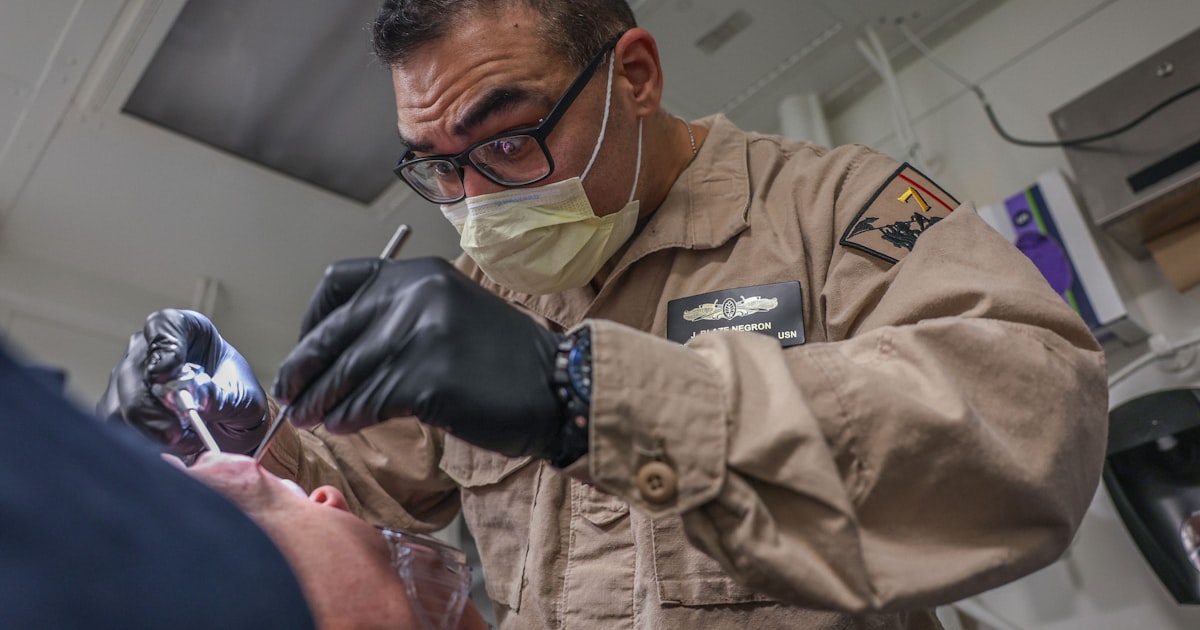
You know that moment. The one where you've just applied the disclosing solution, your patient catches a glimpse of themselves in the mirror, and you can practically see their whole afternoon plans rearranging around the fact that their lips are now bright purple. It's one of those things we've all just... accepted, right? Like it's part of the deal. You want to see the plaque, the plaque has to be coloured, and the colour gets everywhere. That's just how disclosure works.
Except it turns out that's not actually true anymore. And honestly, once you see what colourless disclosure looks like in practice, the old way starts to feel a bit like we were putting up with something we didn't need to.
We've All Had That Conversation
Let's be real for a second. Every single one of us has had a patient who was genuinely upset about the staining. Maybe they had a meeting straight after. Maybe it was a teenager who was already feeling self-conscious. Maybe it was a little one who took one look at the red mouth in the mirror and decided that was quite enough dentistry for today, thank you very much.
And you smiled, you reassured them it would fade, and you carried on. Because what else could you do? Erythrosine and its two-tone successors have been the standard for plaque visualisation since, well, forever. They bind to the biofilm, the colour shows you where the plaque is, and that's that.
The thing is, those dyes don't just stain plaque. They stain pretty much everything they touch: pellicle, debris, soft tissue, composite margins, and your patient's sense of dignity on the way out. Research in Clinical and Experimental Dental Research has even flagged cytotoxicity concerns with these solutions, particularly their effect on gingival epithelial cells. When you think about how often we reach for them across a full day of hygiene lists, that's worth sitting with for a moment.
And here's the really frustrating bit. Once you've got erythrosine all over the soft tissue, actually assessing gingival health becomes harder. The dye masks the very thing you're trying to evaluate. You've got this beautiful clinical eye for gingival colour and texture, and now it's all hidden under a wash of red. It's a bit like trying to check someone's complexion while they're wearing a face mask.
So What Happens When You Take the Dye Out Completely?
This is where things get genuinely exciting. Colourless plaque disclosure doesn't just solve the staining problem. It changes the whole feel of the appointment, and that's something you really have to experience at the chairside to fully appreciate.
The principle is beautifully simple. Instead of colouring the biofilm so you can spot it, you use a reactive agent that physically interacts with the plaque. Where it contacts biofilm, you get a visible foaming reaction: little bubbles forming right where the deposits are. Where there's no plaque, nothing happens. No colour left behind, no residue, no apologetic "it'll fade in an hour or so" on the way out.
What really makes this click for clinicians is that your soft tissue assessment stays completely intact throughout the procedure. Gingival colour, texture, bleeding response: all fully visible the entire time because nothing has been masked. You can disclose and evaluate simultaneously, and across a full day of back-to-back hygiene appointments, that's a workflow advantage that genuinely adds up.
How Magic 3 Puts This Into Practice
The most developed application of this approach available to UK dental professionals right now is Magic 3, created by Dr Wyman Chan. It's worth understanding what's going on with this system because the mechanism is doing something quite different from what you might expect.
Magic 3 delivers a patented 3% hydrogen peroxide formula as a colourless foam. When it meets the tooth surface, the H2O2 reacts with the organic matrix of the biofilm. The oxygen release disrupts the Extracellular Polymeric Substances (EPS) that hold the biofilm together, and the foaming action degrades the plaque by taking out the anaerobic bacteria living inside it. That bubbling you watch happening at the chairside? That IS the disclosure. Wherever you see active foaming, that's where the biofilm was sitting.
Here's the part that really gets people: the disclosure and the removal happen at the same time. Think about what that means for your traditional disclose, assess, scale, polish sequence. With a colourless foam system, you're revealing the plaque and breaking it down in one go. Two or three procedural steps, collapsed into a single application. The published protocol is 2 minutes of application followed by 10 minutes of active working time, and the whole thing is silent and aerosol-free.
No ultrasonic noise. No vibration against the tooth. No water spray. If you've ever had a nervous patient gripping the armrests while the scaler winds up, you already know how much that matters. This is the kind of appointment where an anxious patient can actually sit quietly and breathe while the plaque is being dealt with. For a lot of us, that alone is worth exploring.
Where This Really Comes Into Its Own
The thing about colourless disclosure is that it's brilliant for everyday hygiene appointments, but there are some specific situations where it goes from "nice to have" to "why weren't we doing this all along?"
Working with children is probably the most obvious one. You know how it is with paediatric patients: the sound of the scaler can be scary, the taste of disclosing dye can be awful, and the whole sensory experience of a conventional prophy can tip a nervous child from "managing okay" to "absolutely not." A quiet foam that just sits on their teeth is a completely different proposition. The compliance difference can be remarkable, particularly with children who have additional sensory processing needs. One of those moments where you think, well, that was so much easier for everyone.
Orthodontic patients are another area where this approach really shines. You know the challenge: biofilm accumulating around brackets and under wires in all those impossible-to-reach patterns. A foam that penetrates into those spaces through its own reactive expansion gets into places that a scaler tip or prophy cup simply can't reach around fixed appliances. It's genuinely satisfying to watch the foaming reaction map out exactly where the trouble spots are.
For periodontal maintenance, the gentleness of a non-contact approach matters enormously. When you're working with inflamed or sensitive tissues, having a plaque removal method that doesn't require mechanical force against the gingival margin is a real gift. It won't replace deep scaling for established calculus, but for soft deposit management and ongoing maintenance, the reduced tissue trauma makes a meaningful difference to patient comfort and healing.
The Bigger Picture: Why This Matters Beyond Plaque
Something that's easy to miss when you're focused on the specifics is that colourless disclosure sits within a much larger shift happening across dentistry. We're all moving, gradually but unmistakably, toward approaches that work with the biology rather than against it. You see it in caries management with remineralisation protocols. You see it in periodontics with laser-assisted and endoscopic techniques. And now it's happening in routine hygiene too.
This isn't just about patient comfort, although let's be honest, that should always matter more than we sometimes let it. It's about tissue preservation. It's about reducing iatrogenic damage. It's about targeted intervention that does precisely what's needed and leaves everything else alone. A system that uses controlled oxygen release to selectively disrupt biofilm is fundamentally working with the chemistry of the oral environment, and that's a satisfying thing to be part of.
If you're curious about what else fits within this philosophy, the full product range is designed around exactly these principles.
Is This Something Your Practice Should Be Looking At?
Here's the honest answer: if your current hygiene workflow is smooth and your patients are comfortable, there's no emergency. But if you've ever thought that disclosure appointments could be a bit less messy, a bit quieter, or a bit less stressful for your anxious patients, then yes, this is absolutely worth exploring.
The feedback from practices that have started using colourless foam systems keeps coming back to the same few themes. Appointments feel calmer. Operator fatigue drops noticeably across a full day. Children cooperate more readily. And there's something lovely about patients leaving without that lingering stain on their lips.
There's a patient communication win here too, and it's easy to underestimate. When disclosure doesn't involve staining, patients stop dreading that part of the appointment. They engage with it more willingly, which means you get better longitudinal data on their oral hygiene habits without the resistance that coloured dyes tend to provoke. Over time, that changes the whole dynamic of the conversation around home care.
The profession is moving in this direction. Colourless disclosure represents the practical, accessible leading edge of minimally invasive hygiene, and for the practices that adopt it early, the benefits are immediate and tangible. Your patients will notice the difference from the very first appointment.