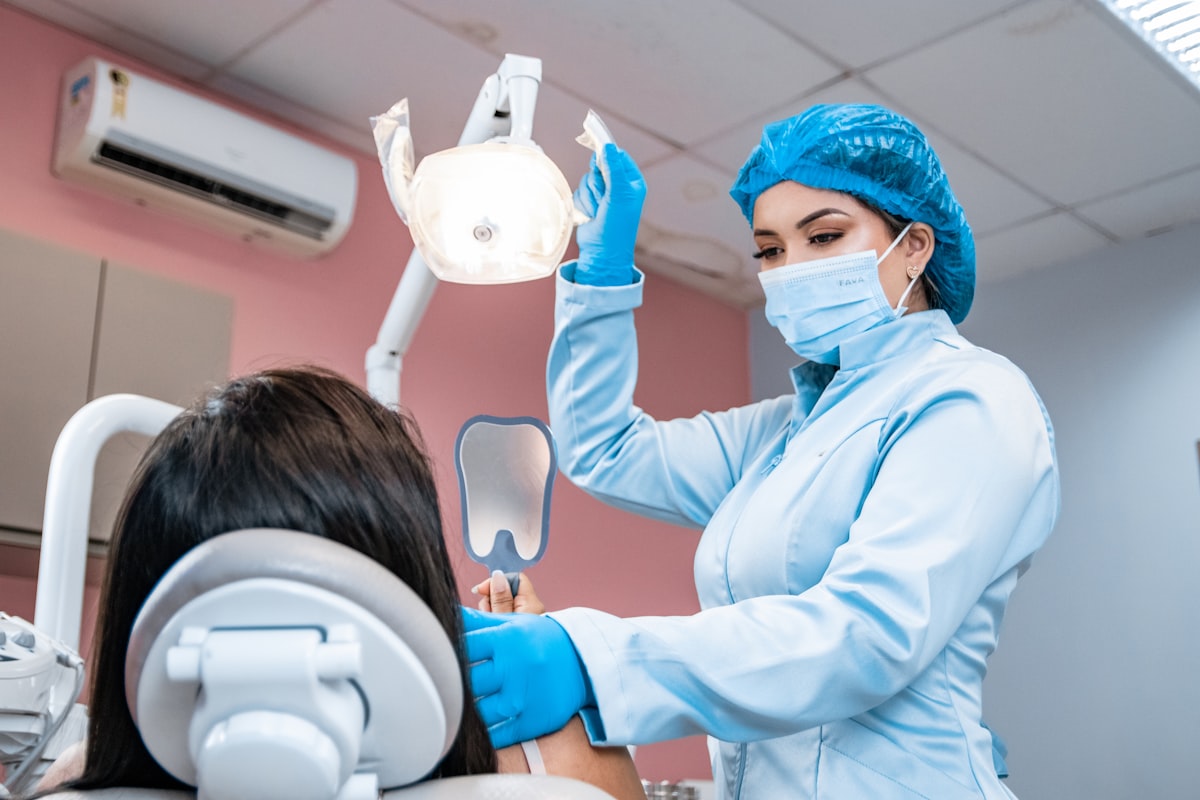
Something interesting happens when you start paying close attention to your periodontal maintenance patients. Not the clinical measurements, though those matter of course. We mean the other thing: the way they walk in, the way they sit down, the way they hold themselves during the appointment. Because a lot of these patients, the ones who've been through active periodontal treatment and are now on their three-monthly recall cycle, carry something with them into every single appointment. And it's not just their toothbrush.
It's dread.
They've done everything right. They completed their treatment, they improved their home care, they show up on schedule. And yet the maintenance appointment itself remains this thing they have to brace themselves for. That's worth sitting with for a moment, because it tells us something important about the gap between what periodontal maintenance is supposed to achieve and what it actually feels like from the patient's side of the chair.
Why the Traditional Approach Can Be Genuinely Traumatic
Let's talk about what a conventional perio maintenance appointment involves for someone with a history of periodontal disease. The tissues are often thinner. The attachment is compromised. Root surfaces may be exposed. The gingival architecture, after treatment, can be quite fragile, and the patient knows this because they can feel it.
Now into this situation we bring an ultrasonic scaler.
The vibration alone can be really uncomfortable against exposed root surfaces. The sensitivity is often sharp and immediate, even with careful technique, because the cementum is thinner there and the dentinal tubules are closer to the surface. Add the water spray hitting inflamed or receded gingival margins, and it's no surprise that some patients describe their maintenance appointments as the thing they dread most about their entire periodontal journey.
And here's the part that really deserves our attention: this is a patient who needs to come back every three months, potentially for the rest of their life. If every single one of those appointments involves significant discomfort, what happens to compliance over time? We all know the answer. Attendance drops. Intervals stretch. And the very thing that maintenance was designed to prevent starts creeping back in.
The Tissue Preservation Argument
There's a clinical conversation happening right now that feels overdue, and it centres on how aggressively we really need to be instrumenting during maintenance visits. The purpose of periodontal maintenance is to prevent disease recurrence by managing the biofilm. That's the core of it. We're not doing root surface debridement at every recall. We're managing soft deposits.
So the question becomes: do we need the same tools for soft deposit management that we use for initial therapy?
When you think about it in those terms, the answer starts to shift. A thin, compromised gingival margin that's been carefully preserved through treatment doesn't need aggressive instrumentation at each maintenance visit. What it needs is thorough but gentle biofilm disruption, with as little mechanical trauma to the tissues as possible. Every time we instrument around fragile periodontal tissues, we create micro-trauma. The tissue heals, yes, but over dozens and dozens of maintenance appointments across years of recall, that cumulative micro-trauma adds up. It matters.
The tissue preservation philosophy says: if you can achieve the same biofilm disruption with less mechanical insult, you should. Not because it's easier, but because the long-term health of those periodontal tissues depends on it.
Non-Contact Plaque Removal: A Different Way of Thinking
This is where things get genuinely exciting from a clinical perspective. The idea that plaque removal has to involve physical contact between an instrument and the tooth surface is so deeply embedded in how we were trained that questioning it can feel almost heretical. But the evidence for non-contact and minimal-contact approaches to biofilm management is growing, and the clinical results are hard to argue with.
The principle is straightforward. If you can chemically or enzymatically disrupt the biofilm matrix without scraping it off the tooth, you achieve plaque removal without the mechanical trauma. For a healthy patient coming in for a routine hygiene appointment, the difference might be subtle. For a periodontal maintenance patient with compromised tissues, exposed roots, and years of recall ahead of them, the difference is profound.
Think about what we're actually removing at a maintenance visit. We're not dealing with calculus in most cases, assuming the active treatment was thorough. We're dealing with soft deposits: biofilm, early plaque, the kind of accumulation that builds up between recall intervals. This is not material that requires aggressive mechanical removal. It's material that responds beautifully to the right chemical approach.
How Magic 3's Foam-Based System Changes the Maintenance Experience
This is where Magic 3 really comes into its own, and honestly, it's in the periodontal maintenance context that the technology makes the most compelling clinical argument.
The foam works by colourlessly disclosing and then gently degrading dental plaque through a chemical process rather than a mechanical one. There's no vibration against sensitive root surfaces. No ultrasonic frequency resonating through a compromised periodontium. No water spray hitting inflamed margins. The foam is applied, it gets to work on the biofilm, and the foaming reaction itself shows you exactly where the plaque is sitting, all within a quiet 10 to 15 minute working window.
For periodontal maintenance patients specifically, several things about this approach are worth highlighting.
The tissue response is remarkably gentle. Because there's no mechanical contact with the gingival margin during the plaque removal process, you're not creating that cycle of micro-trauma and healing that conventional instrumentation produces. The tissues remain undisturbed. For a patient whose gingival architecture has been carefully preserved through periodontal treatment, that's clinically significant.
Then there's the inflammation and bleeding piece. Magic 3 actively reduces acute gingival inflammation and stops gingival bleeding, typically within that same treatment window. For a maintenance patient who often presents with localised inflammation at recall, this is doing double duty: removing the causative biofilm while simultaneously addressing the inflammatory response. That's not something your ultrasonic scaler offers.
The alkaline conditioning effect is another feature that deserves attention in the perio maintenance context. By shifting the oral environment towards an alkaline state, you're creating conditions that are less favourable for the pathogenic bacteria that drive periodontal disease. It's a subtle but meaningful contribution to the maintenance goal of keeping the periodontal environment stable between visits.
Making Maintenance Something Patients Actually Turn Up For
Let's come back to that patient sitting in your chair with their shoulders tense and their hands gripping the armrests. The one who's been through active periodontal treatment and knows exactly how uncomfortable the next 30 minutes might be. What happens when you change the experience entirely?
When the appointment is quiet. When there's no scaler winding up. When a gentle foam replaces the instruments they've been bracing against. When the whole thing feels more like a conversation than an ordeal.
What happens is they come back. On time. Without the dread. And that, from a periodontal outcomes perspective, might be the most important clinical result of all. Because the best maintenance protocol in the world means nothing if the patient stops attending.
We see this pattern again and again. Practices that shift to a gentler maintenance approach for their perio patients report not just improved patient satisfaction but improved compliance. The appointments happen when they're supposed to happen. The intervals don't stretch. The periodontal stability that was achieved through treatment actually gets maintained, because the patient isn't finding reasons to postpone or cancel.
Rethinking Your Maintenance Protocol
You don't need to change everything overnight. If you've got patients on your perio maintenance list who you know struggle with their appointments, who cancel more often than they should, who visibly tense up when they see the ultrasonic being set up, start there. Try a different approach with those patients and pay attention to what changes.
Notice the tissue response at the next recall. Notice the patient's demeanour. Notice whether they rebook without hesitation or whether they do that thing where they say "I'll call to book" (and you both know what that means).
The full range of products we offer is built around this principle: that effective clinical outcomes and patient comfort aren't competing goals. They're the same goal, approached with the right tools.
Periodontal maintenance is a long game. It's years and years of recall visits, each one an opportunity to either reinforce the patient's commitment to their oral health or quietly erode it. The tools we choose for those appointments send a message about what kind of experience maintenance is going to be. And when the message is "this doesn't have to be difficult," everything changes.
Your perio maintenance patients have already been through the hard part. The least we can do is make the ongoing part something they don't have to dread.