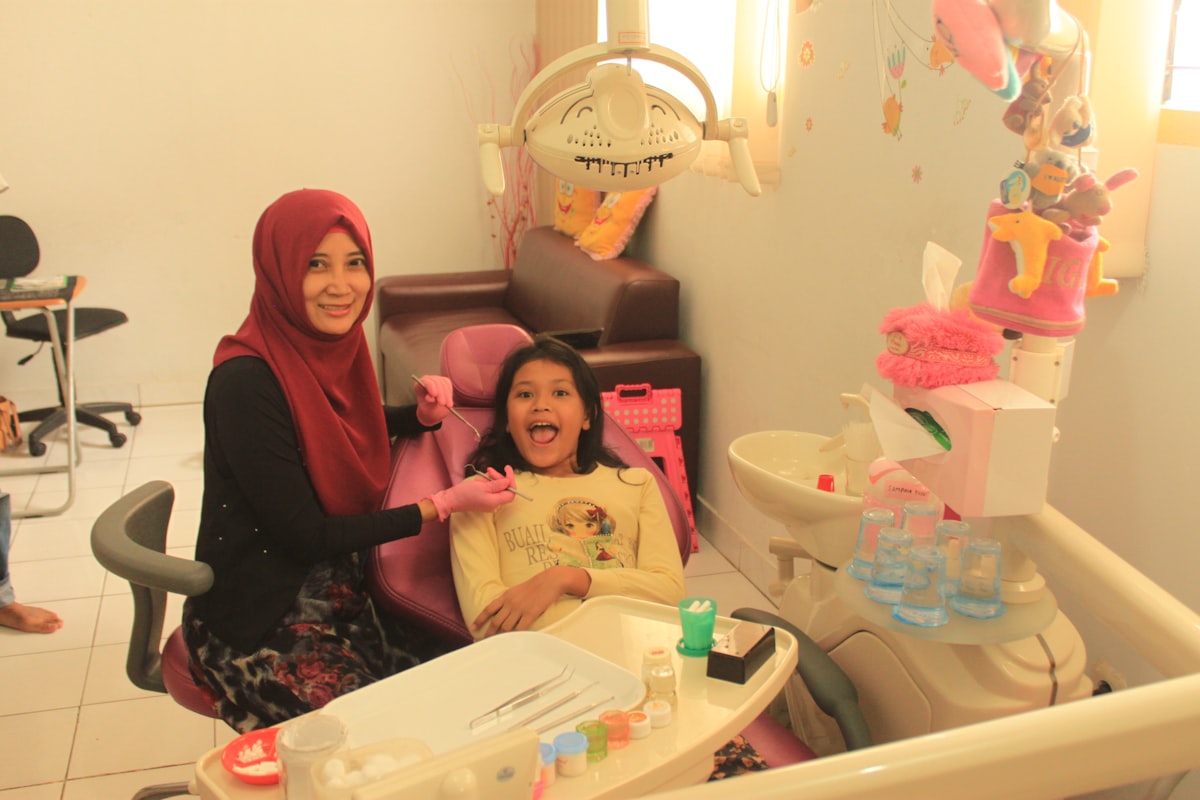
There's a scene that plays out in dental practices across the country, probably every single day. A parent walks in holding the hand of a five-year-old. The child is quiet, maybe a bit wide-eyed, maybe already looking for the exit. Everything about the next twenty minutes will shape how this person feels about sitting in a dental chair for the rest of their life. And that's a genuinely enormous amount of clinical responsibility packed into one hygiene appointment.
We all know the stakes. The evidence on this is clear and, honestly, a bit sobering. Research published in the International Journal of Paediatric Dentistry consistently shows that negative early dental experiences are one of the strongest predictors of dental anxiety in adulthood. We're not just cleaning teeth here. We're building (or breaking) a relationship between a small human and an entire profession.
So why do so many of our tools and protocols feel like they were designed without children in mind at all?
The Sensory Problem Nobody Designed Around
Here's the thing about conventional prophylaxis that's easy to forget when you've been doing it for years: it is an overwhelming sensory experience. As adults, as clinicians, we've normalised it completely. The high-pitched whine of the ultrasonic scaler, the vibration against the teeth, the spray of water, the taste of prophy paste, the gritty texture, the suction tube pulling at the cheek. All at once. In someone else's mouth. While lying on your back under a bright light.
Now imagine you're four.
The paediatric dental literature has been saying this for a while now, but it bears repeating. Studies in the European Archives of Paediatric Dentistry identify noise and vibration as the two most commonly cited sources of distress in children's dental appointments. Not pain, interestingly. The actual clinical discomfort usually isn't the main issue. It's the sensory bombardment. The sound of the scaler alone can push a child from "cautiously cooperating" to "actively distressed" in seconds, and once you've lost that cooperation, the whole appointment unravels.
Then there's the taste factor. Traditional prophy pastes come in flavours that are ostensibly child-friendly, but let's be honest: "bubblegum" prophy paste doesn't taste like bubblegum. It tastes like grit and chemicals with a vague fruity suggestion, and children are absolutely not fooled. Combine that with disclosing agents that turn their entire mouth bright red or purple, and you've created an experience that a child's brain will file firmly under "things to avoid."
Sensory Processing and the Children We're Missing
This conversation gets even more important when we think about children with additional sensory processing needs. Roughly 5 to 16% of school-age children experience some degree of sensory processing difficulty, according to research in the American Journal of Occupational Therapy. For these children, the conventional hygiene appointment isn't just uncomfortable. It can be genuinely intolerable.
A child with sensory processing sensitivity might find the vibration of an ultrasonic scaler physically painful rather than merely annoying. The sound might register as much louder and more distressing than it does for a neurotypical child. The combination of unfamiliar tastes, textures, and physical sensations can trigger a fight-or-flight response that has nothing to do with the child being "difficult" and everything to do with their neurological wiring receiving a completely overwhelming input.
What does this mean in practice? It means we lose these children. Not dramatically, not all at once, but steadily. Appointments get cancelled. Recalls get pushed back. Parents start avoiding the practice because the last visit was so distressing for everyone involved. And by the time these children turn up again, often years later, the clinical picture is worse and the anxiety is deeper. It's a cycle that the paediatric dental community has been writing about for years, and it's one that our choice of clinical tools can either perpetuate or break.
The Compliance Question
Even for typically developing children with no particular sensory sensitivities, compliance during hygiene appointments remains one of the most persistent practical challenges in paediatric dentistry. You know this. You live this. A six-year-old's attention span and tolerance for sitting still while someone works inside their mouth are limited resources, and conventional prophy eats through both of them fast.
The traditional sequence of disclose, assess, scale, polish involves multiple distinct steps, each with its own set of sensory demands. Each transition point is an opportunity for the child's cooperation to slip. The scaler starts: they tense up. You switch to the polishing cup: brief relief, then the new sensation triggers fresh anxiety. You reach for the disclosing solution: now their mouth looks alarming. By the time you've worked through the full protocol, you've asked a small child to tolerate four or five distinct uncomfortable experiences in sequence.
The research from King's College London's paediatric dental team has been particularly clear on this: shorter, simpler, calmer appointment experiences produce significantly better cooperation rates and, crucially, better long-term compliance with recall schedules. The goal isn't just getting through today's appointment. It's making sure this child actually comes back.
What Happens When You Remove the Noise
This is where things get really interesting, and where the practical evidence starts pointing toward something genuinely different.
Consider what a hygiene appointment looks like when you take away the ultrasonic scaler, the polishing cup, the prophy paste, and the traditional disclosing agent. When you replace all of that with a quiet foam that sits on the teeth and does its work through a gentle chemical reaction rather than mechanical force. No noise. No vibration. No water spray. No alarming colours in the mouth.
The Magic 3 system does exactly this. It delivers a colourless hydrogen peroxide foam that reacts with dental biofilm on contact, producing a visible foaming reaction wherever plaque is present. The disclosure and the cleaning happen simultaneously, so your four-step protocol collapses into a single, quiet application. The published working time is 2 minutes of application followed by 10 minutes of active time, and during those 10 minutes, the child is just... sitting there. Comfortably. With foam on their teeth. Nothing loud, nothing vibrating, nothing scary.
For clinicians who've been wrestling with paediatric compliance for their entire careers, this is one of those moments where the difference is so striking that it almost feels unfair to compare. You're not using behaviour management techniques to get a child through a difficult experience. You're offering an experience that simply isn't difficult.
The Sensory Profile That Actually Works for Children
What makes a foam-based approach so fundamentally different for young patients isn't just the absence of noise and vibration, although those matter enormously. It's the overall sensory profile of the experience.
There's no unfamiliar taste to contend with. The foam is essentially tasteless, which means you've removed one of the most common triggers for gagging and distress in young children. There's no gritty texture. There's no water spray requiring suction. The child can breathe normally through their mouth throughout the procedure, which anyone who's worked with anxious small patients will tell you is worth its weight in gold.
For children with sensory processing difficulties specifically, the gentle, predictable, quiet nature of a foam application can be transformative. You're replacing an experience that might register as a 9 out of 10 on their sensory overwhelm scale with something that barely registers at all. That's not a marginal improvement. That's the difference between a child who can access dental care and a child who can't.
The foam approach also gives you something else that's incredibly valuable in paediatric work: the ability to show the child what's happening. Because the foaming reaction is visible, you can point to it, explain it in simple terms, and turn the whole thing into a collaborative moment rather than something being done to them. "See the bubbles? That's the foam finding the sticky bits on your teeth and cleaning them away." Children engage with that. They find it interesting rather than frightening. And that positive engagement is building the foundation for a lifetime of dental attendance.
Building a Better First Impression
Every paediatric dental appointment is an investment in that child's future relationship with oral healthcare. The evidence tells us that clearly, and our own clinical experience confirms it every day. When we choose tools that respect the sensory reality of being a small person in a big, unfamiliar clinical environment, we're not just making today's appointment easier. We're making next year's appointment possible.
If you're finding that nervous patients of all ages respond to calmer, quieter approaches, children are where that principle matters most. Their dental futures are still being written, and the experience we create in these early appointments will echo through decades of recalls, treatments, and clinical relationships.
The practical tools to do this differently are already here. You can explore the Magic 3 system alongside the full product range to see how a quieter, gentler approach to hygiene fits into your paediatric workflow. Because the children sitting in our chairs today deserve appointments that work for them, not ones they simply have to survive.