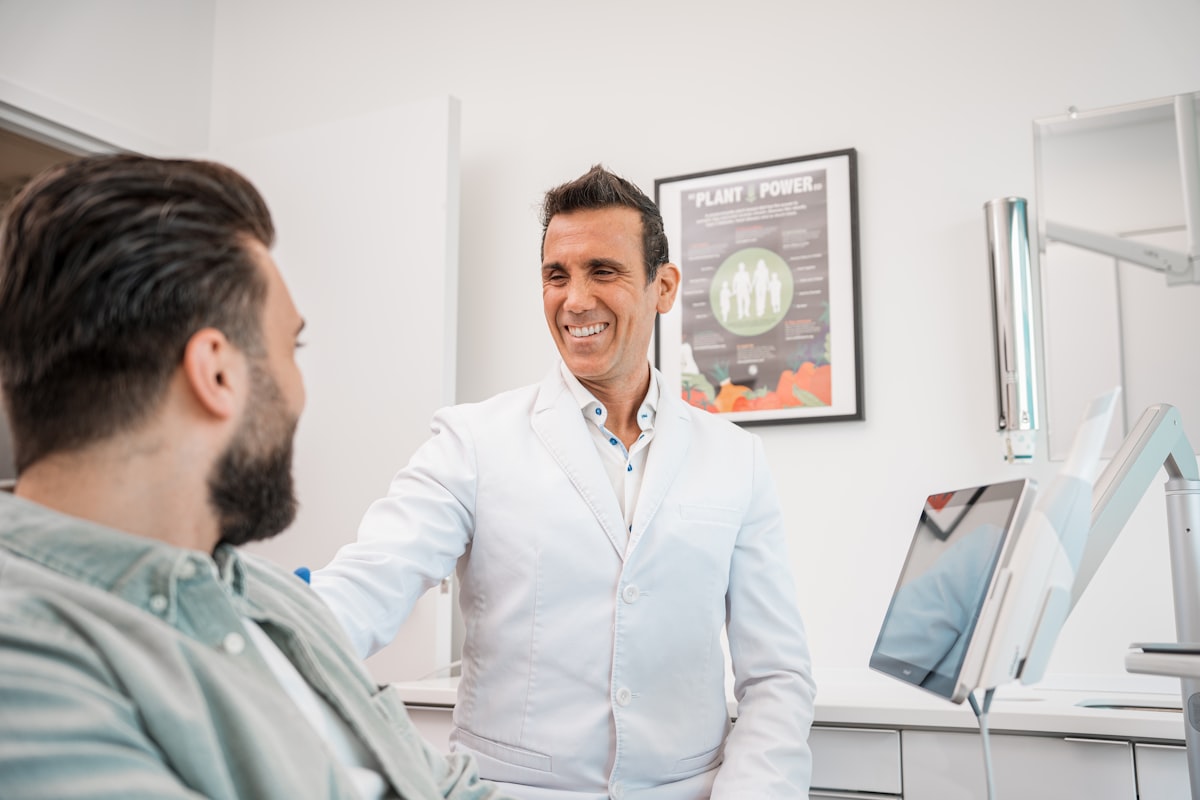
We've all done the talk. You know the one. The patient's reclined, you've just finished scaling, and now comes the bit where you explain, warmly and clearly, that they really do need to be cleaning interdentally. You demonstrate the technique. You make eye contact. You genuinely mean it. And they nod along, they thank you, and six months later they're back with the exact same plaque distribution in the exact same places.
It's not that the dental hygiene tips themselves are wrong. The advice is sound: brush twice daily, clean between teeth, reduce sugar frequency, visit regularly. This is evidence-based stuff. The problem isn't what we're telling patients. It's that we've been delivering it in a way that doesn't account for how people actually change behaviour. And once you start looking at the research on habit formation, you realise there's a pretty significant gap between what we do at the chairside and what the science says actually works.
Why the Traditional "Tell Them and Hope" Model Falls Short
Here's something worth sitting with. A study in the British Dental Journal found that patient recall of oral hygiene instructions drops dramatically within weeks of the appointment. Not months. Weeks. The information goes in, it feels relevant in the moment, and then life happens. The floss goes back in the bathroom drawer. The interdental brushes sit unused next to the toothpaste.
This isn't a patient failing. It's a design problem. We're essentially running a one-shot educational intervention and then wondering why it doesn't produce lasting behaviour change. If you think about any other area of healthcare where sustained behaviour modification matters (smoking cessation, dietary change, exercise adherence), nobody expects a single conversation to do the job. There are frameworks, follow-up systems, staged approaches. But in dentistry, we've somehow settled on "tell them clearly and hope for the best" as our primary educational model.
The thing is, most of us sense this isn't working. That nagging feeling when the same patient returns with the same issues: that's not frustration with them. It's your clinical instinct recognising that something about the approach itself needs to change.
What Behavioural Science Tells Us About Habit Change
The research on habit formation is genuinely fascinating once you start digging in, and it has real implications for how we structure chairside conversations. BJ Fogg's work at Stanford on tiny habits, for instance, suggests that lasting behaviour change doesn't come from motivation or information. It comes from making the new behaviour so small and so anchored to an existing routine that it barely requires any willpower at all.
Applied to oral hygiene education, that means something quite specific. Instead of "you need to floss every day," which sounds like adding a whole new task to someone's already-stretched evening routine, the tiny habits approach would be: "after you put your toothbrush down tonight, just do one tooth with the interdental brush. That's it. Just one." The patient almost can't fail. And once the habit of reaching for the brush is established, expansion happens naturally.
Then there's the concept of implementation intentions from Peter Gollwitzer's research: the idea that people are vastly more likely to follow through on a plan if they specify exactly when and where they'll do it. "I will use my interdental brush after I brush my teeth before bed, standing at the bathroom sink" is dramatically more effective than "I should really start flossing." It sounds almost too simple, but the evidence base for this is remarkably strong.
The point for us as clinicians is that these aren't complicated techniques. They don't require extra appointment time. They require a shift in how we frame the conversation, from general advice toward specific, anchored, tiny commitments that the patient makes in their own words. That shift alone can transform compliance rates.
Show, Don't Just Tell: Why Visual Feedback Changes Everything
There's another dimension to effective chairside education that we've probably all experienced intuitively but don't always use as deliberately as we could. Showing a patient what's happening in their own mouth is profoundly more motivating than describing it. This is where plaque disclosure has always had so much educational potential, even when the execution was a bit clumsy.
The problem with traditional disclosing agents, though, is that they can actually undermine the educational moment. You apply the dye, the patient sees a mouth full of vivid colour, they feel a bit horrified and a bit embarrassed, and the emotional response overshadows the learning opportunity. It becomes about the spectacle rather than the insight. And let's be honest: nobody's really absorbing nuanced information about their brushing technique while their lips are turning purple.
This is one of the reasons colourless plaque disclosure is such an interesting development for patient education specifically. When you remove the drama of the staining, something shifts in the conversation. The patient can see the foaming reaction on specific surfaces, you can point to it calmly, and the discussion becomes collaborative rather than confrontational. "See how the foam is reacting more along that gumline? That's the area we want to focus on at home." No embarrassment, no mess, just clear visual feedback that the patient can actually learn from.
The Magic 3 system takes this further because the disclosure and the cleaning happen simultaneously. So you're not just showing patients where plaque accumulates; you're demonstrating the removal process in a way that's calm, quiet, and comfortable. That creates a completely different emotional association with the hygiene appointment. Instead of dreading the scaler, the patient experiences something gentle and effective, and they leave with a positive reference point for what good oral care actually feels like.
Tongue Hygiene: The Overlooked Conversation Starter
Here's a clinical talking point that's surprisingly powerful for patient engagement, and it's one that most of us underuse. When you address tongue hygiene chairside, patients tend to lean in. It's a bit unexpected, it's something most of them have never been shown before, and the results are immediately perceptible. That combination of novelty and instant feedback is exactly what makes a hygiene message memorable.
Using a professional tongue cleaning tool like the TS1 during the appointment gives you a tangible demonstration that the patient can feel working in real time. The before-and-after difference in how their mouth feels is striking, and it opens up a natural conversation about the tongue's role in oral bacteria, breath freshness, and overall oral health. That's not a lecture. That's an experience the patient is having right there in the chair, and those are the moments that actually change behaviour at home.
What makes this approach so effective educationally is that it sidesteps the motivation problem entirely. You're not asking the patient to take your word for it and go home and try something different. You're showing them, in their own mouth, what comprehensive oral care actually feels like. That sensory memory is far more persuasive than any leaflet.
Building the Conversation Into the Workflow
The temptation when rethinking patient education is to think of it as something extra, a bolt-on that requires more time you don't have. But the most effective chairside education isn't a separate step at all. It's woven into the clinical work you're already doing.
When you use a disclosure system that patients can watch reacting on their own teeth, the education is happening during the procedure. When you clean the tongue and the patient immediately notices the difference, the teaching moment is built into the treatment. You're not finding extra minutes for a hygiene chat. You're using tools that make the clinical steps themselves educational.
That's the real shift here. It's not about finding better dental hygiene tips to recite at the end of the appointment. It's about building your clinical toolkit in a way that turns every procedure into a learning opportunity for the patient. The right instruments don't just do the clinical work; they communicate something to the patient about what's happening and why it matters.
Small Shifts, Real Impact
None of this requires an overhaul of how you practise. It's a collection of small, evidence-informed adjustments: framing advice as tiny habits rather than lifestyle changes, using visual feedback that educates without embarrassing, building demonstration into the appointment rather than bolting education on at the end, and choosing tools that make the clinical work visible and comprehensible to the person sitting in the chair.
The dental hygiene tips we give aren't the problem. The delivery system is. And once you start thinking about chairside education through the lens of behavioural science rather than information transfer, the conversations change, the compliance improves, and those six-month recall appointments start looking genuinely different. That's the kind of outcome that makes a full hygiene list feel less like repetition and more like progress.