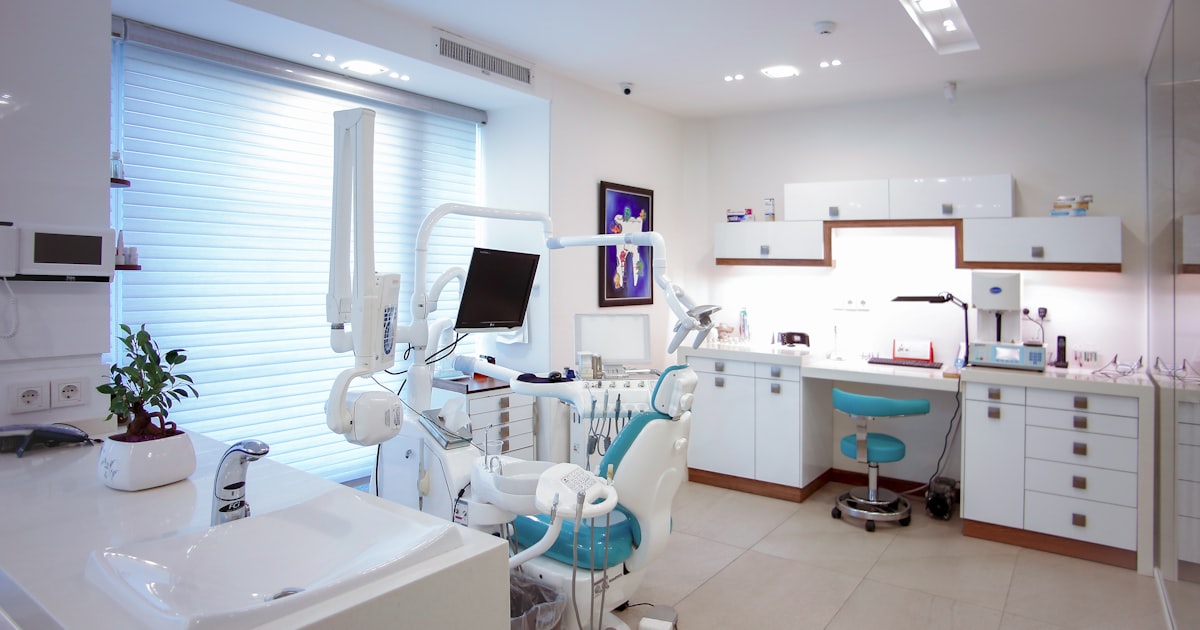
Something interesting has been happening in dentistry over the past few years, and if you've been feeling it in your own practice without quite being able to name it, you're definitely not alone. The whole profession is shifting. Slowly, sometimes quietly, but unmistakably. The direction of travel is away from intervention and toward preservation. Away from "let's fix it" and toward "let's keep it from breaking in the first place." And honestly? It might be the most exciting thing to happen to everyday clinical dentistry in a generation.
We're not talking about some far-off research frontier here. This is showing up in hygiene appointments, in the way we think about caries management, in how we approach anxious patients, in the products we reach for on Monday morning. Non-invasive dentistry in the UK isn't a niche interest anymore. It's becoming the water we swim in.
The Quiet Revolution Happening at the Chairside
There's a particular feeling that comes with drilling into tooth structure. Even when it's entirely the right clinical decision, there's a small part of you that knows: this tissue isn't coming back. Every preparation removes something irreplaceable. And for most of us, that awareness has always been there, humming quietly in the background of our working days. We trained to restore, to prepare, to intervene. That's what dentists do. That's what the instruments are for.
What's changed is that the evidence base has finally caught up with that quiet discomfort. Minimally invasive dental treatment isn't just a philosophy anymore; it's backed by decades of longitudinal research showing that preserved tooth structure leads to better long-term outcomes. The work coming out of King's College London on minimum intervention, the shift toward remineralisation protocols in paediatric dentistry, the growing body of evidence around biofilm management as a primary strategy rather than a last resort: all of it points in the same direction. Keep what's there. Work with the biology. Intervene only when you absolutely must, and when you do, take as little as possible.
For a lot of practitioners, hearing this feels like permission. Permission to trust what they already suspected. That the best dentistry often looks like the least dentistry.
Why Now? What Changed?
You might reasonably ask: if non-invasive approaches are so good, why weren't we always doing this? And the honest answer is that the tools and materials simply weren't there. You can believe in preservation all you like, but if the only thing you've got in your hand is a bur, then preparations are what you'll do. The philosophy was ahead of the technology for a long time.
That's genuinely not the case anymore. The last decade has brought an extraordinary wave of products and systems designed specifically around the principle of doing less harm. High-fluoride varnishes that arrest early lesions instead of drilling them. Resin infiltration techniques that stabilise enamel without touching a handpiece. Bioactive materials that release ions and actually participate in the remineralisation process. Air abrasion systems that can prepare a tiny cavity with a precision that a steel bur could never match.
And in the hygiene space, the shift is just as dramatic. Colourless plaque disclosure systems that reveal biofilm without staining soft tissue. Oxygen-based foam technologies that remove plaque through chemistry rather than mechanical force. Tongue biofilm management tools that address bacterial reservoirs we've been overlooking for decades. The whole landscape of what's available to you at the chairside has transformed, and it keeps accelerating.
What This Looks Like on a Tuesday Morning
Let's get concrete for a moment, because the big picture is exciting but the real test of any philosophy is whether it survives a busy clinic day.
Think about a fairly typical morning list. You've got a nervous patient first thing who hasn't been in for two years. A child who had a rough experience at another practice. A perio maintenance patient who winces every time the scaler comes out. And then a string of routine hygiene appointments that you need to get through efficiently without anyone feeling rushed.
In a traditional workflow, almost every one of those patients involves some degree of mechanical intervention. Scaling, polishing, probing, possibly preparation work. All of it perfectly valid. But each step also carries a small cost: tissue trauma, patient anxiety, sensory discomfort, aerosol generation, operator fatigue accumulating across the day.
Now imagine a morning where some of those steps are replaced or supplemented by non-contact approaches. Where disclosure happens without staining. Where plaque removal for soft deposits uses a quiet, aerosol-free foam rather than ultrasonics. Where the tongue gets properly cleaned in sixty seconds without triggering a gag reflex. Where a patient who came in anxious leaves genuinely surprised by how comfortable the whole thing was. That morning exists. Practices across the UK are already running it.
The cumulative effect across a full day is something clinicians keep mentioning in almost identical terms: everything feels calmer. Your hands are less tired. Patients are more cooperative. The conversations change, too, because when treatment is gentle, the whole relationship between clinician and patient shifts toward collaboration rather than endurance.
The Patient Experience Piece Is Bigger Than We Think
Here's something worth sitting with. We sometimes talk about non-invasive approaches as if they're primarily a clinical decision: better outcomes, less tissue loss, more conservative care. All true. All important. But there's another dimension that might matter just as much in the long run, and that's what it does to the patient's experience of dentistry itself.
Fear of the dentist is still remarkably prevalent. The British Dental Association's own surveys consistently show that dental anxiety affects a significant proportion of the adult population, and for many of those people, the anxiety is specifically tied to the sensory experience: the sounds, the vibrations, the feeling of instruments against teeth and gums. When minimally invasive dental treatment reduces or eliminates those triggers, you're not just being gentler in the moment. You're fundamentally changing that patient's relationship with dental care going forward.
A patient who has a comfortable experience comes back. A patient who comes back stays healthier. A patient who stays healthier needs less intervention. The whole thing becomes a virtuous cycle, and the entry point is simply: this appointment didn't hurt and wasn't scary. That's it. That's the foundation.
For children especially, this matters enormously. A child's early experiences in the dental chair shape their attitude toward oral health for life. Practices that prioritise non-invasive approaches for young patients are quite literally investing in a generation of adults who won't avoid the dentist. That's a powerful thing to be part of.
This Isn't About Abandoning What Works
One thing worth being clear about: the shift toward non-invasive dentistry isn't a rejection of traditional skills. Nobody is suggesting that we stop placing restorations or performing periodontal surgery or using our handpieces. These are essential tools and essential skills. The change is more subtle than that, and more interesting.
What's happening is a reordering of the clinical hierarchy. Intervention moves from being the first response to being the last resort. Preservation becomes the default. And when intervention is needed, it's more precisely targeted and less destructive than it used to be because the tools have improved so dramatically.
The partners we work with at DOCS share this philosophy, and so does every product in the range. The thinking behind what we supply is always the same question: how can we help you achieve the clinical result with the least possible tissue cost? Sometimes the answer is a product. Sometimes it's a different approach to a procedure you're already doing. Sometimes it's just a different way of thinking about what success looks like.
Where This All Goes From Here
The direction is clear and the momentum is real. The GDC's emphasis on preventive approaches, the NHS Long Term Plan's focus on upstream intervention, the growing body of NICE guidance around minimally invasive techniques: the institutional framework is catching up with what the evidence has been saying for years. Practices that align with this direction now aren't being early adopters. They're being timely.
And there's something genuinely exciting about being in practice during this particular moment. We're watching the profession evolve in real time, not through some top-down mandate, but through thousands of individual clinicians making the quiet decision to try a gentler approach and discovering that it works. That the patients respond to it. That the outcomes hold up. That the working day feels better.
If you're curious about what products and approaches are out there to support this kind of practice, or about the philosophy behind why we supply what we supply, we'd love that conversation. Because this shift isn't really about any single product or technique. It's about a whole way of thinking about what good dentistry looks like. And the profession is moving toward something genuinely wonderful.